
On this page
- What is the difference between pool surrounds and pool coping?
- What finish should a concrete pool surround have?
- Is honed concrete good around a pool?
- Does polished concrete work around a pool?
- Why does coping need movement joints?
- How should a pool surround drain?
- Does the surround get too hot to walk on?
- Are pool surrounds a licensed job in NSW?
- Frequently asked questions
A concrete pool surround is a wet area that has to behave like a wet area. The finish, the joint layout and the drainage all exist to do one job, which is to keep water away from the pool structure and keep people upright on a surface that is regularly soaked.
At a glance
- Pool surrounds need a slip-resistant finish, and pattern is not a substitute
- Honed and polished concrete are both common, with different grip and heat behaviour
- Coping is the element at the pool edge and carries a distinct set of requirements
- Movement joints between surround and coping are essential, not optional
- Drainage design determines how the surround performs in ten years
What is the difference between pool surrounds and pool coping?
Concrete pool surrounds are the paved area around the pool. Concrete pool coping is the element at the pool edge itself, sitting over the pool wall and defining where the water meets the deck.
The distinction matters because they are built differently. Coping has to bridge the join between the pool shell and the surrounding deck, accommodate the pool's movement, and provide a safe edge to walk and sit on. Surrounds are a flat area with a drainage and finish requirement.
What finish should a concrete pool surround have?
The finish has to be slip resistant when wet, and that requirement rules some options out. A highly polished surface is beautiful dry and dangerous wet, which is why mechanical polish on a full-depth pool deck is a considered decision rather than a default.
Exposed aggregate gives strong wet grip and a textured feel underfoot, though it can be rough on bare feet. Honed concrete is the common middle ground, holding grip while staying smooth enough to walk on comfortably. Broom finishing is the practical budget option.
Is honed concrete good around a pool?
Honed concrete is one of the most specified finishes for pool surrounds because it balances grip against comfort. The surface is ground back to expose a fine aggregate profile rather than a deep one, which is enough to hold grip when wet without shredding feet.
Our guide to honed concrete covers the process and where it suits, and the same principles apply around water with more weight on the slip-resistance side.
Does polished concrete work around a pool?
Polished concrete pool surrounds are a genuine option and are common on high-end builds, but the sheen level matters. A lower sheen holds measurable grip and looks considered. A high gloss surface next to a pool is a liability regardless of how good it looks in photographs.
Our post on polished concrete finishes explains the sheen levels and where each one belongs, and it includes where polished concrete should not be used at all.
Why does coping need movement joints?
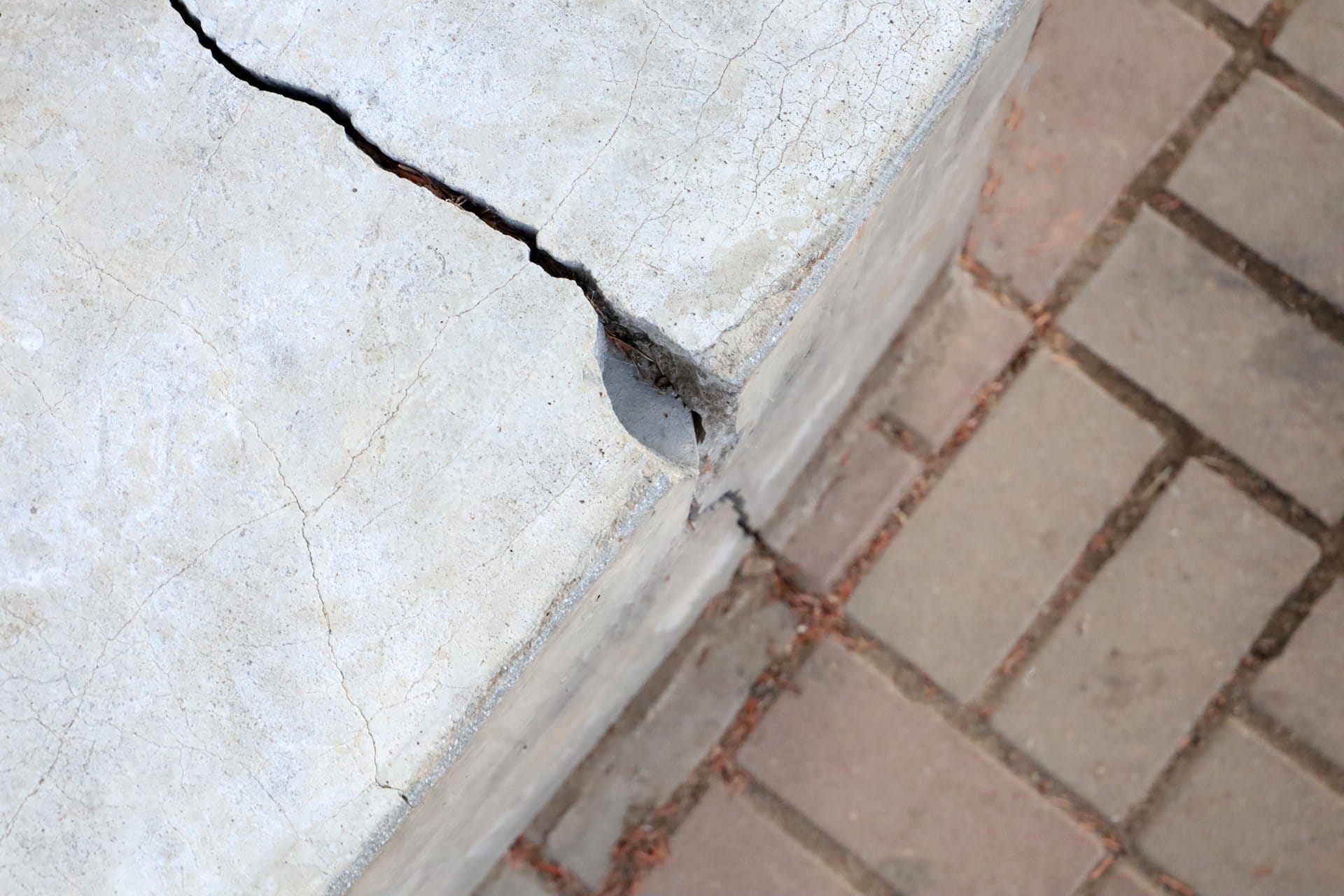
Coping sits over two elements that move differently, the pool shell and the surrounding deck. Without a joint at the interface, the movement has nowhere to go and something cracks.
The same logic applies between separate deck sections and at any point where the deck meets a fixed structure. Joints are there to control where the crack happens, not to prevent movement. Our guide to concrete expansion joints covers the family of joints and how each one differs.
How should a pool surround drain?
Water has to move away from the pool edge and away from the house, not toward either. That usually means a fall away from the coping toward a drainage line, or a level deck with a slot drain depending on the design.
Getting this wrong is not a cosmetic problem. Water sitting against coping accelerates deterioration of both the coping and the pool structure beneath it, and it stains the finish.
Does the surround get too hot to walk on?
Plain grey concrete in full Sydney summer sun can be uncomfortable underfoot, and that is a legitimate design consideration rather than an aesthetic one. Exposed aggregate, lighter coloured concrete and surface coatings all reduce the effect. Adjacent planting and shade cover also change it materially.
Colour selection is also an opportunity, and the difference between a light and a dark mix around a pool is significant in both heat and appearance.
Are pool surrounds a licensed job in NSW?
Pool building itself is separately licensed in NSW. Concreting around a pool is concreting, but the interaction with the pool structure means the work has to be coordinated with whoever built or renovated the pool, particularly on the coping detail and the joint layout.
KMA has held Lic 219967C since 1999. Confirm the licence coverage matches the work you are having done, and check the name matches the business on the quote.
Frequently asked questions
Can you lay a concrete surround around an existing pool?
Yes. The coping detail and the joint between the existing shell and the new deck are what need the most care.
What is the safest finish for a pool deck?
Exposed aggregate gives the strongest wet grip. Honed concrete at a lower sheen is the most common balance of grip and comfort.
How wide should a pool surround be?
Wide enough for a person to walk past someone seated at the edge, and enough to accommodate the drainage line. Narrower than that and the deck is functionless.
Does coping have to be concrete?
No. Drop-face and bullnose concrete coping are common, and stone or tile are alternatives. Concrete coping suits a poured deck because the joint detail is simpler.
Will a concrete deck crack around a pool?
Joints control where it cracks. A deck with no joints will crack somewhere unpredictable instead.
Can a surround be added later, after landscaping?
Usually yes, though access for the truck and the disposal of spoil become the main constraints.
Planning a pool area? Request a quote or call 02 9054 3040. Our concrete pathways page covers the flatwork side, and our post on exposed aggregate driveways explains that finish in detail.
Licensed Sydney concreters pouring residential, commercial and council concrete since 1999. Every job is worked to engineer-certified specifications by our own crew.
NSW Fair Trading Lic. 219967c · ABN 13 160 436 902 · Fully insured