On this page
Concrete spalling and concrete cancer look similar but they are not the same problem. One is cosmetic. The other is structural. Both start with moisture getting into your slab where it should not be, whether that slab is the perimeter of your home or the floor of your shed.
Concrete spalling is surface-level: the top layer flakes, peels or chips away. It looks rough but is usually cosmetic, though it is a warning sign that moisture is penetrating. Concrete cancer is what happens when that moisture reaches the steel reinforcement inside the slab. The rebar rusts and expands, cracking the concrete from within. Rust-coloured staining is the tell. Left untreated, it compromises the slab, and when that slab is under your home or shed, the repair stops being optional.
The simplest check is to walk the perimeter of your home and the edges of your shed and look for rust. No rust means spalling. Rust means cancer. Spalling can be resurfaced. Cancer cannot. The corroded steel must be cut out, cleaned, treated and rebuilt. Surface fixes do not work on cancer. They hide the problem while the rust keeps expanding underneath. Concrete cancer repair is a standard scope for an experienced concreter when caught at stage one or two. Left to stage three or four, it becomes a structural job.
Call KMA on 02 9054 3040 for an honest assessment. We will tell you which one you are dealing with before you spend anything.
This page is a reference for Sydney homeowners trying to understand what is happening to the concrete on their property – whether it is the exposed perimeter of a house slab, the floor of a shed, or a driveway that has seen better days. It covers how to tell spalling from cancer, what causes each one, what the repair process looks like, and how to stop moisture from causing more damage.
Concrete Spalling vs Concrete Cancer: Know the Difference
Confusing the two on a slab is expensive. Treating cancer like spalling lets corrosion keep spreading under your home. Treating spalling like cancer means cutting into concrete that did not need it. Our concrete resurfacing and repair services in Sydney cover both, but the approach for each is completely different, and getting the diagnosis right is what determines the scope.
| Concrete Spalling | Concrete Cancer | |
|---|---|---|
| Type of damage | Surface layer flaking, peeling or chipping away | Steel reinforcement rusting and expanding inside the slab, cracking it from within |
| What triggers it | Poor finishing, weather exposure, age, or chemical contact | Water reaching the rebar through cracks or thin concrete cover |
| Visual signs | Surface flaking with no rust staining and no exposed steel | Rust staining, cracking along rebar grid lines, exposed rusted steel |
| On a house slab | The perimeter face, the slab edge visible above ground | The perimeter where moisture sits against it, near downpipes, behind garden beds |
| On a shed slab | Across the floor surface and along the exposed edges | The edges where water pools, where the shed structure meets the concrete |
| Severity | Usually cosmetic, a warning sign, not a crisis | Structural, compromises the slab from within |
| Repair methods | Grind back, resurface, seal | Cut out, treat steel, rebuild with repair mortar, seal |
The key diagnostic is rust. Rust staining anywhere means the steel beneath is corroding – that is cancer. Clean flaking is spalling. Australian Standards AS 3600 specifies minimum concrete cover over reinforcement at 40 mm to 50 mm for residential slabs. When the cover is adequate and the surface is sealed, moisture stays out. When cover is thin, common on older homes and on budget shed pours, moisture reaches the steel faster. We see this pattern regularly when assessing concrete across greater Sydney. The coastal suburbs and older established blocks carry the highest concentration of cases.
What Is Concrete Spalling?
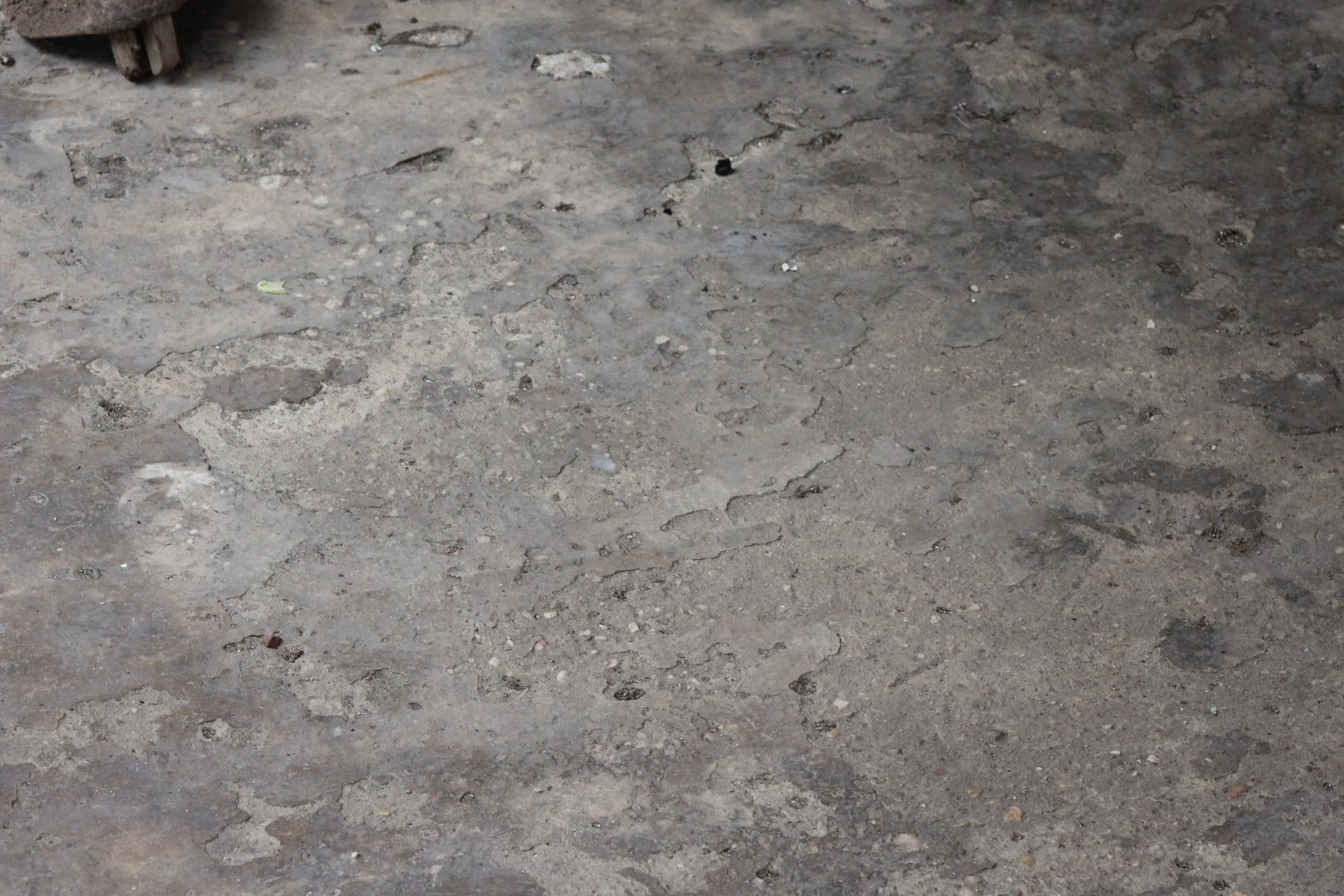
Concrete spalling is the flaking, peeling, chipping or pitting of the surface layer. The concrete spalling meaning is the surface breaking away from the slab. It does not involve the reinforcement and does not affect structural integrity. It is a surface problem.
But it is also a warning. What is a concrete spall if not evidence that water has been working on the surface for years? Once moisture is inside a slab that supports your home or shed, ignoring that warning is how a cosmetic problem becomes structural. Spalling of concrete is common across Sydney, on exposed slab edges, on shed floors, and on any surface that has faced decades of weather without protection.
What Causes Concrete Spalling?
Poor finishing during the pour is the most common culprit. If the concrete was over-trowelled or worked while bleed water was still on the surface, a weak top layer forms. That layer breaks down first. On a house slab, you will see it on the exposed perimeter where finishing was rushed. On a shed slab, it often covers the entire surface because the pour was treated as a secondary job. Concrete finished with excess water at the surface develops a higher water-cement ratio in the top few millimetres. That thin layer is significantly weaker than the concrete beneath. This is one reason shed slabs poured correctly from the start hold up better over the long term.
Weather plays a role too. The surface expands and contracts at a different rate to the concrete beneath it. Over years of Sydney summers and winters, the top layer separates and flakes. A shed slab, sitting fully exposed on all sides, takes the full force of every storm. A house slab perimeter, hit by rain and sun on the exposed face, weathers the same way.
Age and chemicals round out the causes. A slab poured twenty or thirty years ago will show surface wear. Pool chemicals stored in the shed, fertilisers in garden beds against the house slab, fuel spills on the shed floor. All attack the surface and accelerate spalling.
How to Fix Concrete Spalling
The damaged surface is ground back to sound concrete. A resurfacing product is applied over a bonding agent. Once cured, a penetrating sealer goes on. For a standard section of exposed slab edge or shed floor, concrete flaking repair is usually completed in a day. Our concrete resurfacing and repair services cover this as a standard scope.
Spalling repair is driven by surface area, not depth. But ignoring it lets moisture keep penetrating. Left untreated, moisture that was only causing surface flaking can travel deep enough to reach the reinforcement over several years, and a cosmetic problem on a shed floor or slab perimeter becomes structural.
What Is Concrete Cancer?
Concrete cancer is the corrosion of the steel reinforcement inside the slab. It is structural. Unlike spalling, it cannot be ignored and it cannot be patched over. That is why concrete cancer repair always involves cutting back to the steel.
Concrete is porous. Water penetrates through cracks, through poorly compacted concrete, or through areas where the steel was placed too close to the surface. When moisture and oxygen reach the rebar, the steel rusts. Rusting steel expands to up to six times its original volume. That expansion cracks the concrete from within. Rust staining appears. Chunks break away. More water gets in. The cycle accelerates. What causes concrete cancer is almost always moisture finding a path to the steel. The path is usually a crack, thin cover, poor drainage, or all three.
What Causes Concrete Cancer?
Four conditions combine. They apply to every slab on a property, but some slabs are more vulnerable than others.
Thin concrete cover is where it often starts. Reinforcement needs a minimum depth of concrete between it and the outside world. When cover is too thin, moisture reaches the steel faster. A house slab built before the 1990s likely has less cover than modern standards require. A shed slab poured to a budget might have as little as 25 mm, half the protection of a properly specified house slab. AS 3600 specifies 40 mm to 50 mm of cover for residential slabs. Halve that and you roughly halve the time it takes moisture to reach the steel. When we pour a new house slab or shed slab, cover depth is confirmed before the pour begins.
Cracks left open are the entry point. Every slab cracks. Thermal expansion, ground movement, curing shrinkage. A hairline crack on a slab edge or shed floor is an open door. Sealed early, it is nothing. Left open for years, it becomes the entry point for cancer. Water does not need a wide crack. It only needs a path.
Poor drainage is the most common cause across Sydney and the most overlooked. Water sitting against a slab keeps moisture in constant contact with the concrete. Downpipes discharging against the house slab. Garden beds built up against the perimeter. The ground around the shed that stays damp for days after rain. All of it keeps the slab wet, and a wet slab eventually lets moisture through to the steel. The damage happens slowly, out of sight, while you have no reason to look.
Salt exposure accelerates everything. Coastal properties face faster corrosion because salt-laden air attacks the steel’s protective oxide layer. This is why cancer is concentrated in the eastern suburbs, the Northern Beaches, and near the harbour. Saltwater pools add the same risk, and the shed where pool chemicals are stored is often the first place damage appears.
The most common cancer scenario is an older property where the slab has never been sealed, cracks have been open for years, and drainage keeps the ground wet against the concrete. The slab edge or shed perimeter, wherever moisture sits longest, is where the first rust stains appear.
What Concrete Cancer Looks Like
Concrete cancer announces itself in four stages. The earlier you catch it, the smaller the repair.
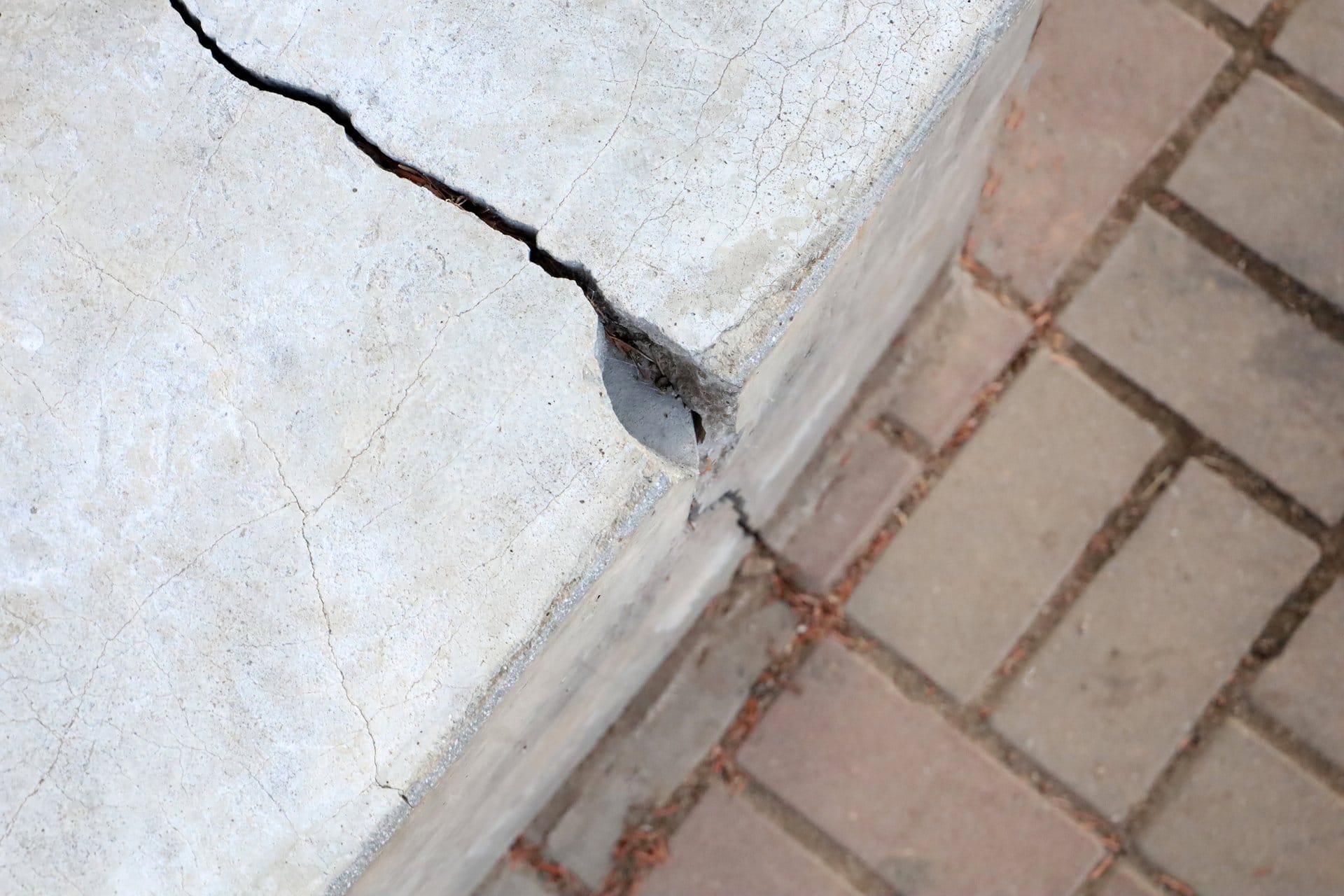
Stage one: rust stains. Reddish-brown discolouration appears on the surface, often in a grid pattern that mirrors the reinforcement layout beneath. Walk the perimeter of your home and look at the exposed slab edge, near downpipes, garden beds, anywhere the soil stays damp. Check the shed slab edges where water pools after rain. Water has reached the steel. Corrosion has started inside the slab. No physical damage yet, but the chemical process is underway.
Stage two: cracking along reinforcement lines. Cracks appear in straight lines following the rebar, parallel or at right angles to each other. These are not the random hairline cracks every slab develops. They track the steel inside the slab. The expanding reinforcement is pushing from within. On a house slab, these cracks appear along the perimeter face. On a shed slab, they may run across the floor or along the edges.
Stage three: spalling and delamination. Chunks of concrete break away, exposing rusted steel. The concrete may sound hollow when tapped. This is when most people first notice, because the damage becomes impossible to ignore. By this point, fixing the slab means cutting concrete out, not patching over it.
Stage four: structural compromise. The steel has lost significant cross-section to rust. The concrete has lost bond to the reinforcement. Load-bearing capacity is reduced. On the slab under your home, the perimeter supporting the external walls is now compromised. On the shed floor, the slab can no longer carry the weight it was designed for.
The timeline varies. A coastal property with thin cover and an unsealed slab can progress from stage one to stage three in a decade. An inland property with good cover might take twenty years. But cancer only moves one way. It never reverses, never pauses, and never fixes itself.
How Concrete Cancer Is Fixed
There is no surface fix. Painting or sealing over corroded steel hides the problem while the rust keeps expanding underneath. The repair must go back to the source. This is what concrete resurfacing and repair looks like when cancer is involved. It is not a resurface. It is a rebuild.
The process follows four steps, and it is the same whether the damage is on a house slab perimeter, a shed floor, or a balcony.
Step one: remove the damaged concrete. All loose, cracked and delaminated concrete is cut out to expose the corroded reinforcement. The removal area is always larger than the visible damage. Concrete that looks sound from the surface may have lost bond strength at the steel level.
Step two: clean and treat the exposed steel. The rusted rebar is cleaned to bright metal by abrasive blasting or wire brushing. An anti-corrosion primer is applied. Where the steel has lost significant cross-section, common on older homes and long-neglected sheds, new reinforcement is spliced in to restore structural capacity.
Step three: rebuild with repair mortar. A polymer-modified repair mortar is applied over a bonding agent, built up in layers if required, and finished to match the surrounding surface.
Step four: seal. A waterproofing coating is applied to the repaired area and the surrounding concrete to stop moisture getting back in. On a house slab perimeter, this protects the entire exposed face. On a shed slab, this protects the floor surface and edges.
For a single isolated cancer patch on a slab edge or shed floor, the repair is typically one to two days. For widespread damage, the work may span several days. The method is consistent regardless of slab type. What changes is the consequence of not doing it.
How to Protect Your Slabs
The same four measures protect every slab on your property. None are complicated. All require you to act before the damage appears, not after.
Seal the concrete. A penetrating sealer every two to three years is the single most effective thing you can do. Seal the exposed perimeter of the house slab. Seal the shed floor and edges. This is the cheapest preventive measure available and the one almost nobody does. A slab that has never been sealed has been absorbing moisture since the day it was poured.
Fix cracks as soon as they appear. A hairline crack cleaned and filled today stops being a problem. The same crack, open for five years while rain drives moisture in, becomes the entry point for cancer. Inspect your slabs annually. Fill anything wider than a hairline.
Fix the drainage. Water should not sit against any slab on your property. Gutters and downpipes should direct water away from the house. The ground around the shed should slope away from the slab. Garden beds and mulch should not be built up against the perimeter. If water sits against your concrete anywhere, fix it before it causes a moisture problem.
On new pours, specify adequate cover. Whether you are pouring a new house slab or shed slab, confirm the reinforcement will be placed with at least 50 mm of cover. Near the coast, specify increased cover and a higher-grade mix. An extra 10 mm of cover at the time of the pour saves thousands over the life of the slab. If you are planning a new pour, talk to us about your house slab or get your shed slab specification right before the concrete goes down.
Self-Check: What to Look for on Your Slab
Before you call, walk around your property and check these items. If you answer yes to any of the first four, it is worth having a concreter take a look.
- Can you see any rust-coloured staining on the exposed slab perimeter around your home?
- Are there cracks running in straight lines along the slab edge, rather than random hairline cracks?
- Is any section of your shed floor or driveway surface flaking, chipping or peeling away?
- Can you see any exposed steel reinforcement anywhere on your concrete?
- Does water pool against the slab edge or shed perimeter after rain?
- Has your house slab or shed slab ever been sealed?
Common Questions
How do I know if it is spalling or cancer?
Look for rust. Rust staining anywhere means the steel is corroding – that is cancer. Clean flaking with no staining and no exposed steel is spalling. Not sure? A concreter can diagnose it in minutes on site.
Get Your Slab Assessed
Spalling and cancer both get worse the longer they are left, but only one compromises the structure of your home. Getting the diagnosis right is the difference between a minor repair and a major one.
KMA Concrete Constructions has been pouring and repairing house slabs and shed slabs across greater Sydney since 1999. We know how moisture moves through concrete. We know what a slab perimeter should look like and what it looks like when something is wrong. We are not a referral service. We do not subcontract. When you call, you speak directly with an experienced concreter who will walk the slab with you, explain what they are seeing, and tell you honestly whether it needs attention now or can wait.
Call 02 9054 3040 to arrange a site inspection. You will get a straight, itemised quote with no surprises.
Request a quote online | House slab concreters Sydney | Concrete shed slab Sydney | Concrete resurfacing and repair Sydney
Licensed Sydney concreters pouring residential, commercial and council concrete since 1999. Every job is worked to engineer-certified specifications by our own crew.
NSW Fair Trading Lic. 219967c · ABN 13 160 436 902 · Fully insured