On this page
- Should You Resurface or Replace Your Concrete Driveway?
- Concrete Resurfacing vs Full Replacement: The Full Comparison
- What Is Concrete Resurfacing?
- How Does the Concrete Resurfacing Process Work?
- What Finish Can You Choose With Concrete Resurfacing?
- How Long Does Concrete Resurfacing Last in Sydney?
- Is It Worth Resurfacing a Concrete Driveway?
- Can You Resurface Cracked Concrete?
- Concrete Resurfacing Near Me: What to Check Before Booking in Sydney
- Frequently Asked Questions
- The Point That Matters Most
Concrete resurfacing is the process of applying a new polymer-modified cement overlay to an existing slab to restore its surface without demolishing and replacing the structure beneath. In Sydney, concrete resurfacing is the right answer when the slab is structurally sound and only the surface is failing. Full replacement is required when the slab has moved, heaved or cracked through its full depth.
Concrete resurfacing costs significantly less than replacement and, on a sound slab prepared and applied correctly, should last ten to fifteen years. The single most important step before committing to any concrete resurfacing job in Sydney is an honest on-site assessment of the existing slab – not a phone quote. If the structure is sound, driveway resurfacing is cost-effective and the right call. If it is not, resurfacing over a failing slab wastes money and the cracks return within eighteen months.
Should You Resurface or Replace Your Concrete Driveway?
Resurface when the surface is failing but the slab structure beneath is sound. Surface cracking, staining, worn finish and scaling are all surface problems that concrete resurfacing fixes. On a structurally sound slab, driveway resurfacing extends the serviceable life by ten years or more at a fraction of the cost of a full new pour.
Replace when the slab has moved, cracked through its full depth, heaved, or has a failing sub-base. Applying concrete resurfacing over structural movement produces a result that mirrors the original damage within eighteen months. The money spent on concrete resurfacing is lost and replacement is still required.
This is the assessment that every concrete resurfacing job in Sydney must start with – and it is the question most homeowners skip before getting a quote.
Concrete Resurfacing vs Full Replacement: The Full Comparison
Here is how to read what your existing concrete is telling you, using the same criteria KMA applies on every assessment call across Sydney.
Surface Cracking Only
Fine hairline cracks that do not extend through the full depth of the slab, surface scaling, crazing or a worn smooth finish – these are surface problems. The slab structure is likely sound. Concrete resurfacing is viable, appropriate and the right economic decision.
Full-Depth Cracking
Cracks visible from both top and bottom, cracks with vertical displacement where one edge has lifted above the other, or cracks that have visibly grown over time – these indicate structural movement in the slab. Driveway resurfacing applied over a slab that has moved will mirror those cracks in the new overlay. Concrete resurfacing is not the answer. Replacement is.
Heaving or Uneven Surfaces
Sections of slab sitting at different heights indicate sub-base failure beneath the concrete. No concrete resurfacing product repairs a sub-base problem. The slab must come out, the sub-base addressed, and a new pour placed on a correctly prepared base.
Hollow Spots and Delamination
Tap the surface of your existing concrete. A solid sound indicates good bond throughout. A hollow, drum-like sound indicates the surface has separated from the slab beneath it. Concrete resurfacing bonded over a delaminated surface bonds the new layer to a layer that is already failing – it will not hold.
Staining and Appearance Only
Sound slab, surface looks terrible – stained, discoloured, worn or dated. This is the best-case scenario for concrete resurfacing in Sydney. The structure is fine, the surface needs renewal. Driveway resurfacing and resealing will completely transform the appearance.
If you are unsure which category your slab falls into, KMA will assess it honestly before providing any quote. View the concrete resurfacing and repair service page for details.
What Is Concrete Resurfacing?
Concrete resurfacing is the application of a new polymer-modified cement overlay bonded to an existing slab to restore the surface without removing and replacing the underlying structure. It is one of the most commonly requested services KMA handles across Sydney – the reasons homeowners call are consistent across Penrith, Blacktown, Campbelltown, Liverpool, Parramatta and the Hills District: surface cracking, staining that will not shift, worn finish from years of vehicle traffic, or a plain grey driveway that needs a functional and visual upgrade.
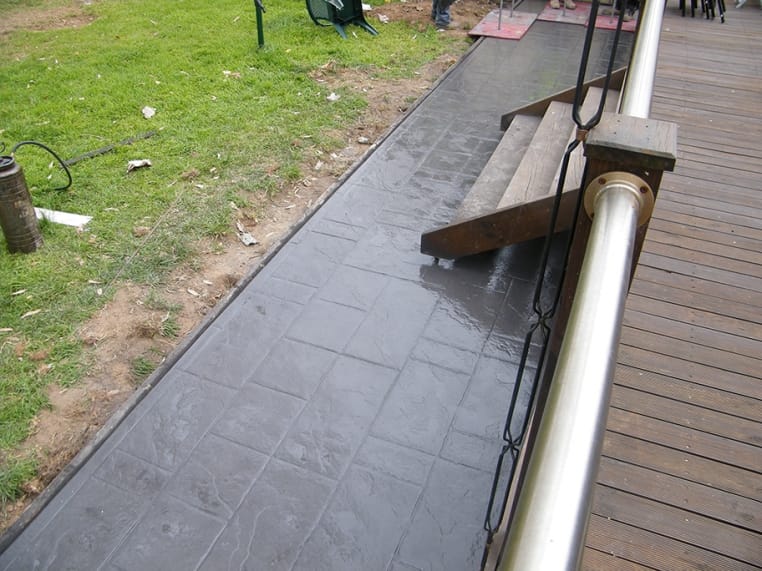
The concrete resurfacing layer bonds to the prepared surface and can be finished multiple ways – plain texture, exposed aggregate overlay, coloured overlay or stencilled finish – giving homeowners the option to change the appearance of their driveway at the same time as renewing the surface.
Driveway resurfacing is the most common application. Concrete resurfacing works equally well on pathways, patios, pool surrounds and commercial concrete floors where the structure is sound and the surface has deteriorated.
How Does the Concrete Resurfacing Process Work?
Step 1: Surface Preparation
This single step determines whether the concrete resurfacing job lasts a decade or fails within two years. All oil, grease, existing sealers, paint and loose or crumbling concrete must be fully removed before any resurfacing product touches the surface. High-pressure water blasting and mechanical grinding are the standard preparation methods for concrete resurfacing in Sydney. Rushed or incomplete preparation is the primary cause of premature failure on driveway resurfacing jobs – there are no shortcuts here.
Step 2: Crack Repair
Existing surface cracks must be treated before the concrete resurfacing layer is applied. A flexible crack filler accommodates minor movement without reflecting through the new overlay. This is a surface fix – it prevents cosmetic cracking through the resurfacing layer, not movement in the underlying slab.
Step 3: Resurfacing Application
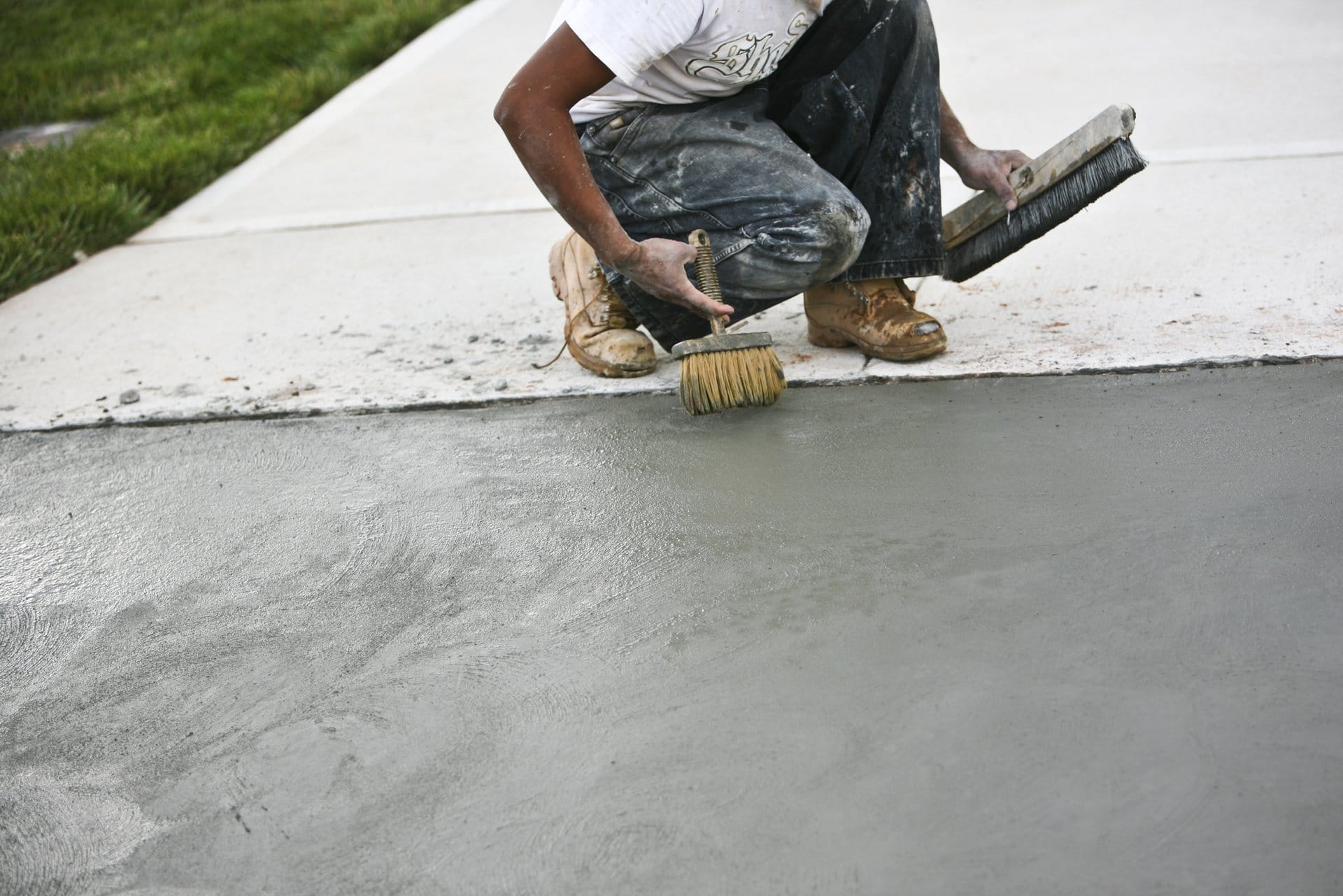
The concrete resurfacing compound is applied over the fully prepared surface and finished to the chosen texture. Polymer-modified cement overlays are the standard product for exterior concrete resurfacing in Sydney – they bond reliably to existing concrete, handle Sydney’s UV and temperature range and can be finished multiple ways. For larger driveways and commercial surfaces, spray-on concrete resurfacing using sprayable concrete and spraycrete products allows faster, more consistent coverage. Spray on concrete resurfacing methods are well suited to large areas where hand-applied overlays would produce an inconsistent result.
Step 4: Sealing
Once the concrete resurfacing layer has cured, sealing protects the new overlay and enhances appearance. Concrete sealing is not optional if longevity is the goal – the sealer is the barrier against oil, UV and staining. Concrete sealing on a Sydney driveway resurfacing job, done correctly and with a sealer suited to the exposure conditions, extends the lifespan of the full concrete resurfacing job significantly. A concrete resurfacing overlay without a quality sealer degrades faster in Sydney’s sun than a sealed surface.
A standard residential driveway resurfacing job in Sydney typically takes one to two days depending on surface area, preparation requirements and weather conditions on the day.
What Finish Can You Choose With Concrete Resurfacing?
Concrete resurfacing is not just a repair – it is an opportunity to upgrade the finish of your driveway at the same time. Homeowners resurfacing a worn plain concrete driveway can make a significant improvement.
Spray-On Concrete Resurfacing
A fine cement-based overlay applied by spray that adds consistent fresh texture across the existing surface. Spraycrete and spray on concrete resurfacing methods are fast, cost-effective and produce a significant visual improvement on a stained or worn plain slab. Well suited to large driveways and commercial concrete resurfacing in Sydney where hand application would be slow and inconsistent.
Exposed Aggregate Overlay
Aggregate is seeded into the concrete resurfacing layer and washed back before curing to produce a finish similar to a new exposed aggregate concrete driveway – without the full replacement cost. For homeowners who want the exposed aggregate look on a structurally sound existing slab, this is the right path.
Coloured Concrete Resurfacing Overlay
Oxide pigment added to the concrete resurfacing compound produces a coloured finish that runs through the full depth of the new layer. A strong option for plain grey driveways where colour is wanted to match the property’s palette.
Stencilled Concrete Resurfacing
Patterns pressed into the resurfacing layer before curing produce decorative finishes at lower cost than full decorative concrete installation. Consistent results require an experienced crew – timing the stencil application correctly against the cure is the variable that determines quality.
How Long Does Concrete Resurfacing Last in Sydney?
Professional concrete resurfacing on a sound slab, prepared and applied correctly, should last ten to fifteen years in normal Sydney residential conditions. The factors that shorten that lifespan are consistent:
- Poor surface preparation before concrete resurfacing is applied
- Applying concrete resurfacing over a slab with structural movement
- No sealer applied after the concrete resurfacing layer cures
- Heavy vehicle loads on a resurfacing layer not specified for that use
- Extreme temperature or humidity during application affecting the cure
Driveway resurfacing overlays restore appearance and surface performance on a sound structure. Concrete resurfacing is not a structural repair. If your driveway regularly carries heavy commercial vehicles, that load needs to be part of the specification conversation before any concrete resurfacing product is selected.
Is It Worth Resurfacing a Concrete Driveway?
Yes – when the conditions are right. Concrete resurfacing is worth doing when the slab is structurally sound, the surface damage is genuine and the resurfacing job is specified and installed correctly.
When those conditions are met, driveway resurfacing extends the serviceable life of an existing slab by a decade or more at meaningfully lower cost than a full new pour. Refacing concrete on a sound slab is consistently better economic value than demolishing concrete that does not need to come out.
When those conditions are not met – specifically when the slab has structural issues – concrete resurfacing is money applied to a failing foundation. An honest concretor tells you which situation you are in before accepting the job.
Can You Resurface Cracked Concrete?
It depends on the type and cause of the cracking. Surface cracks – fine hairline cracking, crazing or shallow scaling – are surface issues that concrete resurfacing can bridge and cover effectively when the crack filler and overlay are applied correctly.
Full-depth structural cracks with displacement are a different matter. Applying concrete resurfacing over a slab that has moved at depth reproduces the cracking in the new overlay once further movement occurs. If your concrete has cracked through its full depth with visible edge displacement, concrete resurfacing is not the answer. A new pour on a correctly prepared sub-base is.
If you cannot determine which type of cracking your driveway has, KMA will assess it on site before quoting either option. View the concrete driveways Sydney page for context on what a full new driveway pour involves when replacement is the right call.
Concrete Resurfacing Near Me: What to Check Before Booking in Sydney
Searching concrete resurfacing near me in Sydney returns a wide range of providers. The one thing to check before booking any of them: do they inspect the slab before quoting, or do they quote concrete resurfacing over the phone without seeing the existing concrete?
A concrete resurfacing quote without a site inspection is a quote without the critical piece of information – whether the existing slab is actually suitable for resurfacing. An honest concretor inspects the concrete first. If concrete resurfacing is the right answer, they resurface it to last. If replacement is the right answer, they tell you that instead.
KMA provides concrete resurfacing across greater Sydney with an honest on-site assessment before any scope is confirmed. Penrith, Blacktown, Campbelltown, Liverpool, Parramatta and surrounding suburbs are our home ground – we have been handling concrete resurfacing and new pours across Sydney since 1999.
Frequently Asked Questions
How much does concrete resurfacing cost in Sydney?
Cost varies based on surface area, preparation required, finish type and whether sealing is included. Driveway resurfacing is consistently less expensive than full replacement when the slab is sound. KMA provides itemised quotes so you see exactly what you are paying for.
Can I resurface my concrete driveway myself?
Small patch repairs are achievable for a capable DIYer. Full driveway resurfacing – including surface preparation, crack repair, overlay application and sealing – requires equipment and timing experience that most DIY attempts lack. Delamination caused by poor preparation is the most common failure mode on DIY concrete resurfacing jobs.
How long after concrete resurfacing can you drive on it?
Typically 24 to 48 hours for light foot traffic and three to five days for vehicle traffic, depending on the overlay product and curing conditions. Your concretor will confirm the specific timeline.
Does concrete resurfacing work on pool surrounds?
Yes. Concrete resurfacing is widely used on Sydney pool surrounds where the structure is sound but the surface is worn, stained or scaled. Finish selection for pool surrounds needs to account for slip resistance and exposure to pool chemicals.
Is concrete resurfacing the same as resealing?
No. Resealing applies a protective coating over the existing surface and is a maintenance task. Concrete resurfacing applies a new structural overlay layer bonded to the existing concrete. Resealing alone cannot fix surface cracking, scaling or significant staining – concrete resurfacing is required for those problems.
The Point That Matters Most
Concrete resurfacing works when the slab works. The entire decision comes down to one honest on-site assessment of what is actually happening beneath the surface of your existing concrete. Get that right and driveway resurfacing is a cost-effective, high-quality outcome that extends the life of your driveway by a decade or more. Get it wrong and you are spending money on a concrete resurfacing job that will fail.
KMA Concrete Constructions has been handling concrete resurfacing and driveway replacement across greater Sydney since 1999. Our own crew assesses your slab honestly – we do not push the larger job because it earns more.
Call 02 9054 3040 or request a quote online to have KMA assess your concrete across any Sydney suburb. NSW Lic. 219967c. Operating since 1999. Own crew on every job.
Licensed Sydney concreters pouring residential, commercial and council concrete since 1999. Every job is worked to engineer-certified specifications by our own crew.
NSW Fair Trading Lic. 219967c · ABN 13 160 436 902 · Fully insured