On this page
- The Four Factors That Determine Lifespan
- Lifespan by Installation Quality
- What Sealing Does to Lifespan
- What Sydney’s Climate Does to Unprotected Driveways
- Signs Your Driveway Is Telling You Something
- How to Extend Your Driveway’s Life
- How Long Does an Exposed Aggregate Driveway Last?
- Repair, Resurface or Replace?
- Frequently Asked Questions
25 to 40 years on a correctly specified and properly installed slab with basic sealing and maintenance. Driveways that fail before 10 years almost always share the same root cause: insufficient slab thickness, inadequate sub-base preparation, wrong concrete grade or missing control joints. The concrete itself rarely fails early. The specification beneath it does.
KMA Concrete Constructions has been pouring driveways across greater Sydney since 1999. This article is based on what we find when we go back to assess driveways installed 10, 15 and 20 years ago, and when we are called to diagnose driveways that have failed well ahead of schedule.
The Four Factors That Determine Lifespan
These specification decisions are made on pour day. Get all four right and the driveway performs for 30+ years. Get any one wrong and the lifespan drops significantly.
1. Sub-base preparation
The most important factor and the one most often compromised on cheap quotes. Most of western Sydney sits on Bringelly Shale, reactive clay classified H1 or H2 under AS 2870. This clay swells when wet and contracts when dry. A poorly compacted or absent sub-base allows the clay to move freely beneath the slab, placing cyclic stress on the concrete from below every wet and dry season. A correctly prepared 75 to 100mm compacted road base sub-base locks the slab in position. Without it, even a well-poured slab begins to crack within 3 to 7 years on these soils.
KMA has assessed failed driveways across Penrith, Blacktown and Campbelltown. The pattern is consistent: the sub-base was either absent or thinned to save cost, and the reactive clay did the rest.
2. Slab thickness
AS 3727.1:2016 sets 100mm as the minimum for residential driveways carrying passenger vehicles. A 75mm pour lacks the tensile depth to resist load and soil movement. The difference in lifespan between a correctly specified slab and an undersized one can be 15 years or more. You cannot tell the thickness from the surface once the job is done and the concrete has cured.
3. Concrete grade
N25 (25MPa) is the minimum correct grade for a vehicle driveway. N20 is rated for pedestrian use only. Pouring N20 concrete to cut cost produces a slab that dusts under tyre abrasion, is more porous and more susceptible to UV surface degradation. On sloped sites and H2-rated reactive clay, N32 is the correct specification.
4. Control joints
Concrete cracks as it cures because the hydration process causes minor shrinkage. Control joints are saw-cut into the slab at planned intervals within the first 24 hours after pour to guide where that cracking occurs. Correctly placed control joints mean the slab cracks in concealed locations within the joint profile. Missing control joints mean the slab cracks wherever the internal stress concentration is highest, which is usually across the most visible part of the driveway.
Lifespan by Installation Quality
| Installation Quality | Expected Lifespan |
|---|---|
| Correctly specified, installed, sealed and maintained | 30 to 40 years |
| Correctly specified and installed, minimal sealing | 20 to 30 years |
| Under-specified (thin slab, poor sub-base), maintained | 10 to 20 years |
| Under-specified, unsealed, unmaintained | 5 to 12 years |
These ranges are consistent with what KMA observes across Penrith, Blacktown, Campbelltown and the Hills District. The 5 to 12-year figure is not bad luck or defective concrete. It is a predictable outcome of a slab poured without the correct sub-base, thickness or control joints.
What Sealing Does to Lifespan
Sealing is the single maintenance action with the greatest impact on how long a driveway lasts.
A sealed slab resists UV surface degradation, oil penetration and moisture ingress. Each of these factors, unchecked on an unsealed surface, gradually increases porosity, weakens the surface layer and accelerates deterioration. A correctly sealed and maintained driveway consistently reaches the upper end of its lifespan range. An equivalent unsealed slab typically falls 5 to 10 years short of what it could have achieved.
The full sealing guide covering when to seal, which sealer to use and what each finish requires is at sealing a concrete driveway: the Sydney homeowner’s complete guide.
What Sydney’s Climate Does to Unprotected Driveways
UV intensity. Sydney’s UV ranks among the highest in the world. UV breaks down the cement surface on unsealed slabs and bleaches pigments in coloured concrete. KMA has assessed driveways in Parramatta and Penrith where the surface appeared 15 years old at the four-year mark. The concrete structure was fine. The unsealed surface had been exposed to full northern sun since installation with no protection.
Thermal cycling. Western Sydney regularly exceeds 40 degrees in summer and drops significantly overnight in winter. Concrete expands under heat and contracts as it cools. Control joints accommodate this thermal movement without cracking the slab body. Missing joints leave the slab with nowhere to move except along internal stress fracture lines. Over successive summer-winter cycles, the thermal stress accumulates until the slab cracks through.
Reactive clay movement. Seasonal moisture cycling on H1 and H2 soils causes the greatest cyclic stress on driveways across western Sydney. Summer drought conditions shrink the clay and create voids beneath slabs. Autumn and winter rain expands the clay and pushes upward. A slab on a correctly prepared sub-base accommodates this without cracking. A slab on a thin or absent sub-base is progressively cracked by it, year on year, until the damage becomes visible.
Signs Your Driveway Is Telling You Something
Not every form of damage signals end of life. Here is how to read what you are seeing.
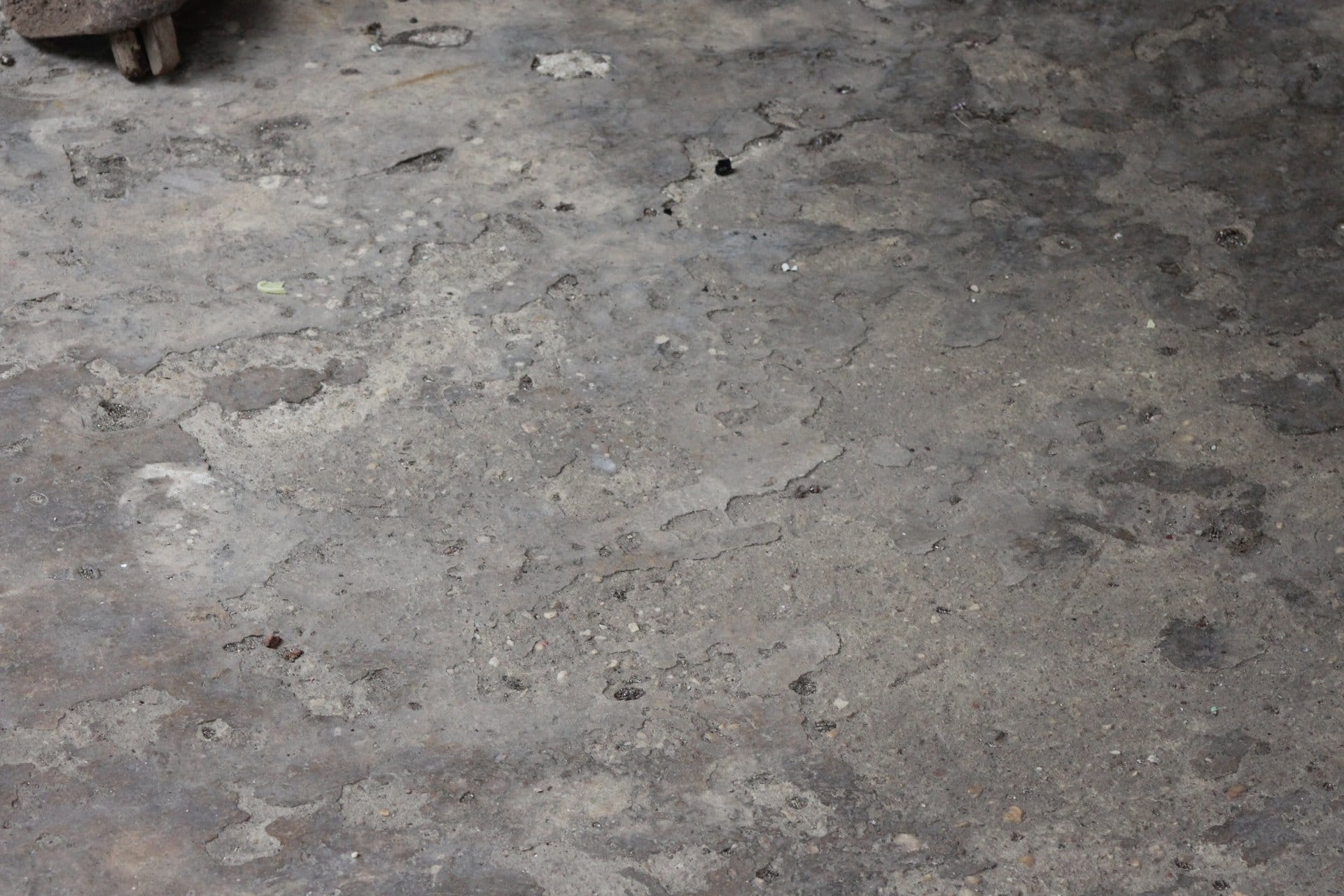
Surface crazing and scaling. Fine surface cracks, a powdery top layer or flaking of the surface skin. Surface degradation from UV exposure, poor curing in the original pour, or acid cleaning damage. On a structurally sound slab, resurfacing extends life. On a slab at the thin end of specification, resurfacing buys limited time.
Hairline surface cracks with no vertical displacement. Cracks that sit on the surface only and do not penetrate through the full depth of the slab. Shrinkage cracks from the curing process or minor thermal movement. Fill with polyurethane crack filler and seal. Not a structural failure.
Full-depth cracking with vertical displacement. One edge of the crack sits higher than the other. The slab has moved with the soil beneath it. Resurfacing over this type of crack mirrors the original damage in the new overlay within 18 months. Replacement is the correct path.
Heaving or sunken sections. Areas where the slab surface sits at different levels. Sub-base failure or soil movement beneath the slab. No surface treatment addresses this. Replacement is required.
Rust staining on the surface. Orange-brown staining indicates the reinforcement mesh inside the slab has corroded and expanded, cracking the concrete from within. This is concrete cancer. It progressively worsens if untreated and eventually compromises structural integrity. The affected section requires removal, steel treatment and re-pour.
KMA assesses existing driveways across greater Sydney before recommending any repair path. See the concrete resurfacing and repair service page for what each path can and cannot deliver.
How to Extend Your Driveway’s Life
In order of impact:
- Seal within 28 days of the original pour. Reseal every 2 to 5 years depending on the sealer type and UV exposure. Never use acid-based cleaners on any concrete surface.
- Clean up oil and chemical spills immediately before they penetrate the surface.
- Pressure wash annually to remove organic growth, leaf staining and surface contamination.
- Fill hairline surface cracks with polyurethane filler before water works into them and seasonal clay movement widens them.
- Do not repeatedly park caravans, boats or heavy plant on a slab not specified to carry the point load.
- Avoid placing skip bins directly on the driveway surface without confirming the slab specification can support the load.
How Long Does an Exposed Aggregate Driveway Last?
An exposed aggregate concrete driveway installed to the same structural specification as plain concrete lasts 25 to 40 years. The structural lifespan is identical to any other concrete driveway: it is determined by slab thickness, sub-base preparation, concrete grade and control joints, not by the surface finish.
What exposed aggregate offers beyond plain concrete is a durability of appearance. The exposed stone surface does not wear back under vehicle loads the way a brushed cement surface does. After ten years of regular use, an exposed aggregate driveway typically looks considerably closer to its original condition than an equivalent plain pour under the same traffic and sun exposure. This durability of appearance is one of the primary reasons exposed aggregate remains the most requested driveway upgrade across Sydney. KMA’s exposed aggregate guide covers the long-term performance data in detail.
Repair, Resurface or Replace?
Repair is correct when damage is localised: a cracked section, a spalled area, concrete cancer on a structurally sound surrounding slab.
Resurface when the surface has deteriorated broadly but the slab beneath is sound, level and free of full-depth movement cracks. Correctly applied resurfacing adds 10 to 15 years to a sound base.
Replace when the slab has moved, cracked through its full depth with vertical displacement, heaved, or when the sub-base has failed. No surface treatment holds on a structurally failed slab. Resurfacing over it reproduces the original damage pattern within 18 months.
For a straight assessment of which path applies to your driveway, call 02 9054 3040 or request a quote online.
Frequently Asked Questions
How long does a concrete driveway last?
25 to 40 years on a correctly specified and installed slab with basic sealing and maintenance. Driveways that fail before 10 years almost always have a specification problem: thin slab, poor sub-base, wrong concrete grade or missing control joints.
Does sealing extend the life of a concrete driveway?
Yes. A correctly sealed driveway consistently reaches the upper end of its lifespan range. An equivalent unsealed slab typically falls 5 to 10 years short.
Why did my concrete driveway crack so quickly?
Premature cracking is almost always caused by one or more of: slab poured too thin for the load, inadequate or missing sub-base preparation, reactive clay movement under an unprepared base, or missing control joints. The concrete itself rarely fails early when the specification is correct.
When should I replace rather than repair my driveway?
Replace when the slab has moved, cracked through its full depth with vertical displacement, when sections are sunken or heaved due to sub-base failure, or when rust staining indicates corroded reinforcement expanding from within. Surface treatments do not fix structural failure.
How long does an exposed aggregate driveway last?
25 to 40 years structurally, the same as any correctly specified concrete slab. The exposed stone surface holds its appearance closer to new condition for longer than plain concrete under the same traffic, because the grip and colour live in the stone rather than in a brushed cement surface that wears back.
Is it worth resealing an old concrete driveway?
Yes, provided the slab is structurally sound. Resealing a sound slab restores oil stain resistance, UV protection and appearance at a fraction of the cost of resurfacing or replacement. An old slab with surface crazing or fading but no structural movement is a strong candidate for a clean and reseal.
Last updated
Licensed Sydney concreters pouring residential, commercial and council concrete since 1999. Every job is worked to engineer-certified specifications by our own crew.
NSW Fair Trading Lic. 219967c · ABN 13 160 436 902 · Fully insured