On this page
For most Sydney homes, concrete is the stronger long-term choice. It costs less to install than comparable-quality pavers, requires less ongoing maintenance and performs consistently on reactive clay soils. The gap closes in the upper property market where natural stone pavers carry genuine premium, and on sites where individual repair without visible patching is a specific priority.
Here is how KMA calls it after 26 years of pouring concrete driveways across Penrith, Blacktown, the Hills District and Campbelltown.
Upfront Cost: What Drives It for Each Option
At the entry level, plain concrete and standard concrete pavers sit at similar installed costs. The gap widens as finish quality increases on the concrete side and stone quality increases on the paver side. Exposed aggregate concrete competes directly with mid-grade brick and stone pavers on installed cost while outperforming them on long-term maintenance cost. Natural stone pavers sit significantly above both in terms of installation outlay.
For a quote on a concrete driveway specific to your site and finish preference, call 02 9054 3040 or request a quote online. For the full breakdown of what drives concrete driveway pricing in Sydney, see the concrete driveway cost guide.
Long-Term Cost: Where Concrete Wins
Installation is one day’s decision. Maintenance is 20 years of decisions. This is where the comparison shifts clearly in concrete’s favour.
Concrete maintenance over 20 years involves annual pressure washing, periodic resealing every 2 to 5 years depending on the sealer system, and occasional crack fills on surface-level cracks. The maintenance cycle is straightforward and infrequent.
Paver maintenance over 20 years involves annual weed management in joints, regular joint sand top-ups as sand erodes from rain and traffic, periodic sealing, individual paver replacement as units crack or sink, and a full re-sand and re-lay at approximately the 20-year mark. Each of these is a separate cost and time commitment.
The directional conclusion is consistent regardless of specific numbers: concrete costs meaningfully less to own across a 20-year window. See the sealing guide for the full concrete maintenance schedule by finish type.
Durability: How Each Option Fails
Both are durable when correctly installed. The difference is how they fail and what fixing that failure costs.
Concrete failure mode: cracking. A full-depth crack with vertical displacement means the slab has moved with the soil beneath it. Cutting out and re-pouring that section leaves a visible colour and texture difference. Functional, but it shows. A correctly specified concrete slab on a properly prepared sub-base rarely cracks structurally before 25 years on Sydney residential soils. See the concrete resurfacing and repair page for how to read the damage correctly when it does occur.
Paver failure mode: movement. Individual units sink, lift or separate when the bedding sand shifts or the sub-base settles. On reactive clay sites across western Sydney, seasonal soil movement causes localised subsidence under paver driveways. The advantage is that a sunken paver can be lifted, the sub-base relevelled and the paver relaid without touching the surrounding surface. Low-cost repair, effectively invisible.
The reactive clay factor. On Bringelly Shale across Penrith, Blacktown and Campbelltown, both options need identical sub-base quality to perform. A concrete slab on a poorly compacted base cracks. Pavers on a poorly compacted base shift and sink. The sub-base preparation determines 25-year performance far more than the choice of surface material.
Day-to-Day Maintenance Reality
Concrete: Pressure wash when dirty. Wipe oil before it sets. Reseal on schedule. No joint maintenance required. A well-maintained concrete driveway takes roughly 30 minutes of active maintenance per year outside the reseal cycle.
Pavers: Pressure wash periodically. Pull or spray weeds establishing in joints. Top up joint sand as it erodes from rain and traffic. Relay individual units that sink or lift before they become a trip hazard. On a paver driveway with polymeric sand joints, weed pressure is significantly lower than with standard kiln-dried sand. Pavers require more frequent active attention than concrete, particularly in the first five years while the joints settle and compact.
Drainage
Pavers have a genuine advantage. Individual joints allow water to pass through to the base material, reducing surface runoff. On sites where council stormwater requirements limit impervious surfaces, or where a steep slope creates stormwater management concerns, a permeable paver system can meet requirements that a solid concrete slab cannot match without additional drainage infrastructure.
On standard flat residential sites with regular stormwater connections, a correctly graded concrete slab drains adequately and the drainage advantage of pavers is minimal. This is a site-specific consideration, not a universal argument for pavers.
Appearance and Resale Value
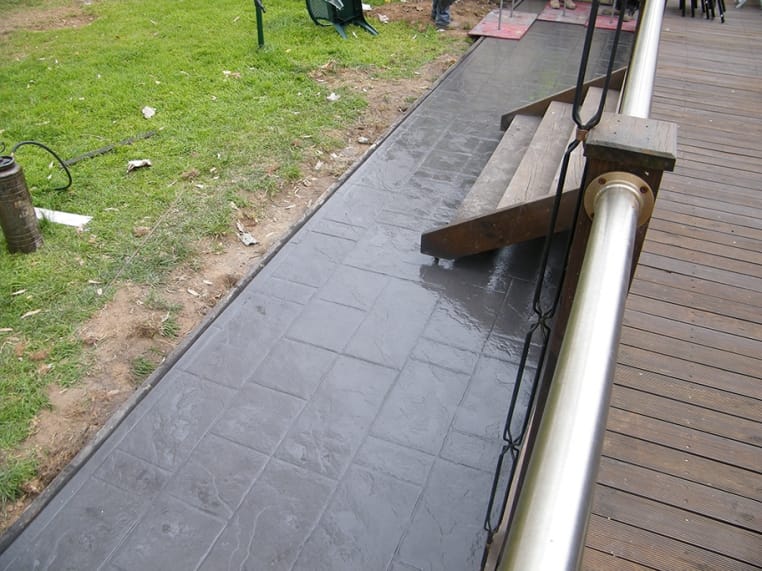
Plain concrete is clean and functional. It suits a wide range of home styles and is neutral to slightly positive for resale. It does not subtract from a property’s value when well-maintained, but it does not add perceived premium either.
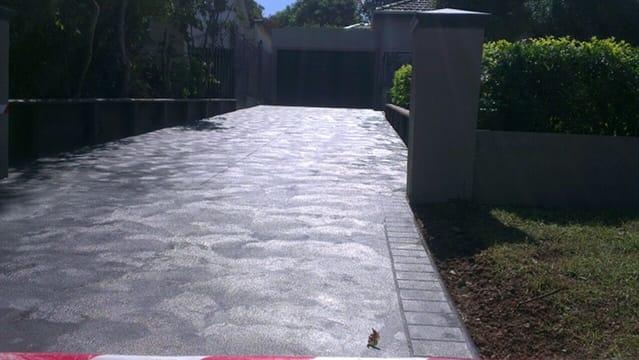
Exposed aggregate concrete is where the visual comparison becomes genuinely interesting. A well-specified exposed aggregate driveway in granite or river pebble reads as a premium, considered finish at inspection. It costs less than most natural stone paver options and requires less maintenance over 20 years. For the majority of Sydney homes in the mid-market bracket, exposed aggregate is the strongest combination of cost, appearance and durability available. KMA’s full guide to exposed aggregate driveways Sydney covers the process, stone colour options and what the finish looks like after ten and fifteen years of real-world use.
Natural stone pavers carry genuine perceived value in Sydney’s upper-market and heritage property segments. A well-laid bluestone or sandstone driveway on a Federation or Californian bungalow reads as a period-appropriate, considered choice that buyers at that price point specifically want. For these properties, the higher installation cost and ongoing maintenance burden of natural stone pavers is justifiable. For a standard three-bedroom home in Penrith or Blacktown, it is not.
Mid-grade brick pavers sit between concrete and natural stone on both cost and perceived value. They look better than plain concrete at inspection and cost less than stone, but require more maintenance than either concrete option and deliver less visual impact than exposed aggregate concrete at similar cost.
Which Should You Choose?
Choose concrete when the priority is the lowest total cost over 20 years, minimal ongoing maintenance and consistent performance on reactive clay soils. Exposed aggregate in particular delivers premium appearance at a lower lifetime cost than most paver options.
Choose pavers when individual repair without visible patching is specifically important, when permeable drainage is a site or council requirement, or when the aesthetic of natural stone or period brick is necessary for the property’s style and the higher cost and maintenance are acceptable.
On a reactive clay site in western Sydney with a standard suburban home: exposed aggregate concrete is the lower-risk, lower-maintenance choice across a 25-year horizon.
Call 02 9054 3040 to discuss your site, or request a quote online.
Frequently Asked Questions
Is concrete or pavers cheaper for a driveway in Sydney?
At the entry level both sit at similar installed cost. Natural stone pavers are significantly more expensive. Over 20 years, concrete’s lower maintenance cost makes it the cheaper option in most scenarios. Call 02 9054 3040 for a quote specific to your project.
Which lasts longer, concrete or pavers?
A correctly installed concrete driveway lasts 25 to 40 years. Well-maintained pavers last 40+ years because individual units can be replaced as they fail. Concrete has a lower maintenance burden to reach its design life.
Are pavers better for Sydney’s reactive clay soils?
Pavers accommodate localised soil movement by shifting individually rather than cracking across a whole slab. This is an advantage for repair cost on reactive clay sites. Both options require the same quality of sub-base preparation to perform correctly. The base matters more than the surface material.
Does a paver driveway add more value than concrete at resale?
Not consistently. Exposed aggregate concrete matches mid-grade pavers on perceived value for most Sydney homes. Natural stone pavers command genuine premium in upper-market and heritage property segments. A well-installed driveway of either type adds value. A poorly installed or maintained one subtracts from it.
Do pavers need more maintenance than concrete?
Yes. Pavers require weed management, joint sand maintenance and individual unit relaying over time. Concrete requires periodic sealing and occasional crack management. Both need active maintenance to reach their design life, but concrete demands less frequent attention year to year.
Can I convert my existing paver driveway to concrete?
Yes. Pavers need to be removed, the base assessed and either recompacted or upgraded, and a new concrete slab poured. It is not a simple overlay. The cost is comparable to a full new driveway installation on a cleared site.
Last updated
Licensed Sydney concreters pouring residential, commercial and council concrete since 1999. Every job is worked to engineer-certified specifications by our own crew.
NSW Fair Trading Lic. 219967c · ABN 13 160 436 902 · Fully insured