On this page
- What makes a set of concrete steps feel right?
- How does riser and tread geometry work?
- What is the difference between poured and precast concrete steps?
- How are concrete steps tied into a slab?
- What tread finish works on outdoor steps?
- Does the concrete step treadd need a fall?
- How do steps interact with a driveway on a slope?
- When should you use concrete stepping stones instead?
- Frequently asked questions
Concrete steps are the one element on a residential job where a small geometry error is visible forever. Unlike a driveway, you cannot hide a bad riser behind a finish. Here is what determines whether concrete steps feel right underfoot and last.
At a glance
- Every step is defined by riser height and tread depth, and they must stay consistent
- Consistency matters more than the individual dimension you choose
- Poured and precast steps suit different sites
- Nosing detail and texture determine slip resistance
- Steps tying into a slab need a joint at the interface
What makes a set of concrete steps feel right?
Consistency. A staircase where every riser is identical and every tread is identical feels effortless, and one where a single riser is 20mm taller than the others feels wrong immediately, even if nobody can say why.
The practical rule is that people notice the difference before they can describe it. That is why setout happens before a single board goes up, and why changing one dimension mid-build is far more trouble than getting the arithmetic right at the start.
How does riser and tread geometry work?
Rise is the vertical distance from one tread surface to the next. Going is the horizontal depth of each tread. The relationship between them governs how comfortable the stair is to climb, and there are established proportions used in Australian residential construction.
Two constraints sit on top of the proportions. The riser has to be low enough to climb without effort, and the tread has to be deep enough to land a foot fully. Where site width is tight, a deeper riser with a shallower tread is a compromise that gets steeper and less safe. Where there is room, a gentler set with deeper treads is both safer and better looking.
What is the difference between poured and precast concrete steps?
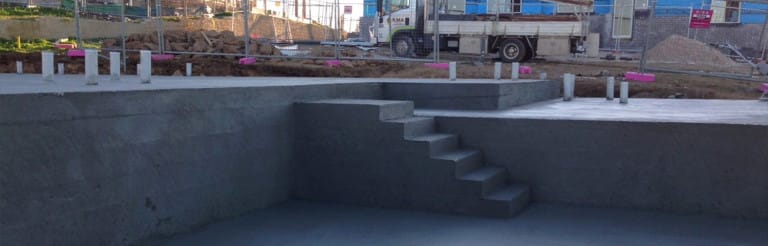
Poured steps are formed in place, tied into the adjacent slab or retaining structure, and finished on site. Precast concrete steps are cast elsewhere, delivered complete and lifted into position.
Poured concrete steps win where the stair is tied structurally to a slab or where the geometry is unusual, because the whole thing becomes one continuous element. Precast concrete steps win on speed and on sites where forming in place is impractical, and they often suit access stairs where a crane or excavator can set them.
Our post on formwork explained covers how the temporary structure that holds wet concrete actually works, which is the same principle behind a step form.
How are concrete steps tied into a slab?
A set of steps running off a house slab or alfresco needs to move with the slab, not independently of it. That means continuous reinforcement where the two elements meet and a deliberate joint placement rather than an accidental one.
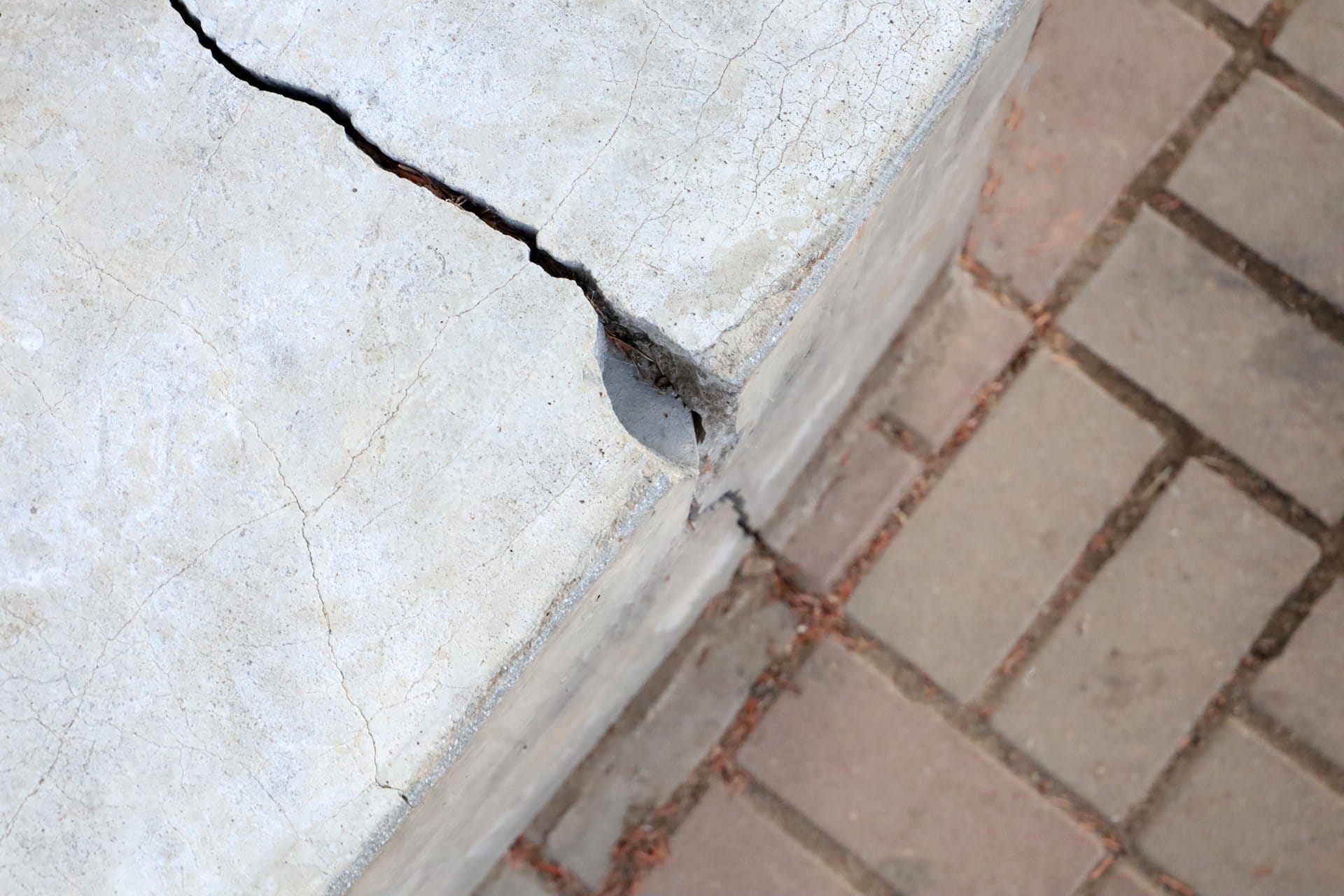
Getting this wrong produces a hairline crack exactly at the internal corner, which is where water gets in and where the crack becomes a trip edge over time. Our guide to concrete around a house covers how adjacent elements should be detailed.
What tread finish works on outdoor steps?
Texture, not pattern, is what makes a step safe. A plain smooth surface is the worst option outdoors, particularly on north-facing steps that stay damp and grow biofilm.
Broom finishing, light exposure of aggregate, or a grooved nosing band all improve grip. On steps that carry water, a fall across the tread so it drains rather than pools matters as much as the texture itself.
Does the concrete step treadd need a fall?
Yes, on any exposed outdoor step. Water pooling on a tread is both a slip hazard and a durability problem, because standing water drives freeze-thaw damage in colder areas and accelerates surface wear everywhere.
The fall is small and imperceptible underfoot, but it has to be formed rather than assumed. It also needs somewhere to go, so the detail below the bottom step matters.
How do steps interact with a driveway on a slope?
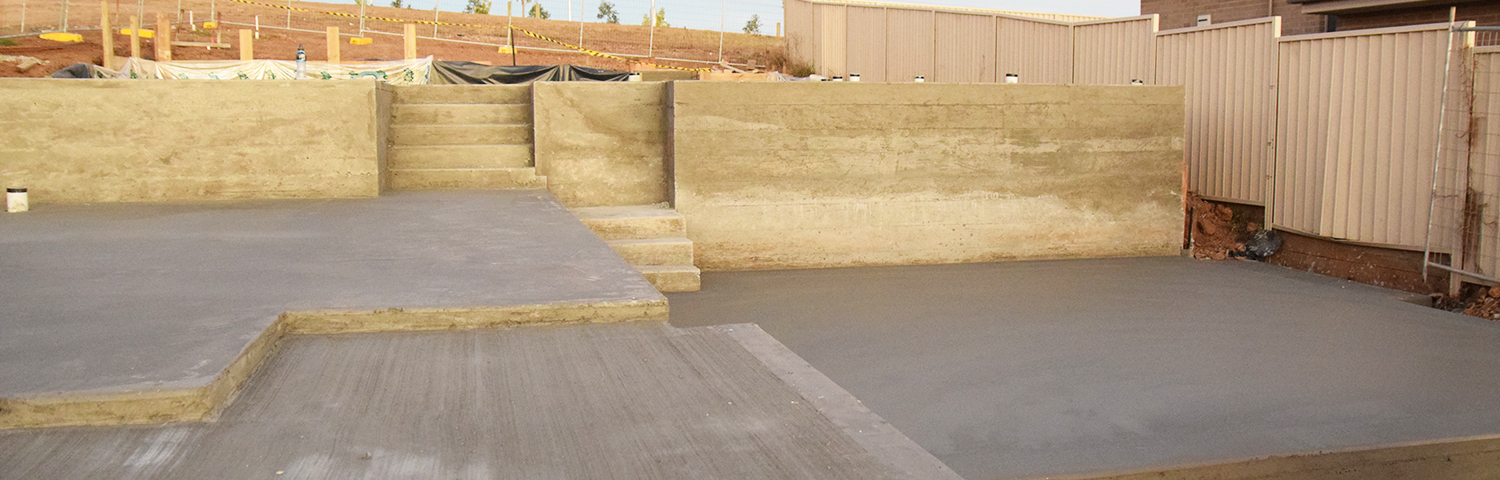
A sloped site usually needs both a graded driveway and a separate stepped pedestrian route, and the two have to reconcile at the property boundary. Whatever else happens, the pedestrian route should not discharge water across the driveway.
Our post on concrete driveways on a slope covers how fall, retaining and drainage are managed on a grade, and most sloped jobs need both elements designed together.
When should you use concrete stepping stones instead?
Where the pedestrian route is light traffic, informal and across a garden rather than a level change. Individual poured pads set into turf or mulch solve a path problem without the cost of a formed stair.
They are not a substitute for steps on a genuine level change. Anything above a single low rise should be a formed step with consistent geometry, because stepping stones on a grade are a trip hazard.
Frequently asked questions
How many steps do I need for a level change?
Divide the total rise by your chosen riser height. Keep the result consistent across the flight rather than absorbing a remainder into one step.
Can steps be added to an existing slab?
Yes, usually with a dowelled or tied connection and a joint at the interface. Attaching new work to a cured slab without proper connection is what causes separation.
Are precast steps cheaper?
Not necessarily. Precast saves site labour but adds delivery, lifting and setting costs, and it limits the geometry to standard profiles.
How do I stop steps getting slippery?
Texture plus drainage. A broomed or lightly exposed finish with a fall across the tread does more than any coating.
Can wide steps be poured without joints?
Beyond a certain width, no. Joints are placed to control where cracking happens rather than to prevent it.
Do outdoor steps need reinforcement?
Most do, and any step tied to a slab certainly does. A monolithic pour with continuous reinforcement is the more durable option.
Planning steps on a sloped site? Request a quote or call 02 9054 3040. Our concrete pathways page covers the related paths and paving work, and you can check coverage on our areas serviced page.
Licensed Sydney concreters pouring residential, commercial and council concrete since 1999. Every job is worked to engineer-certified specifications by our own crew.
NSW Fair Trading Lic. 219967c · ABN 13 160 436 902 · Fully insured